
下面比網校雅思頻道為大家整理了雅思聽力材料:維梅爾-繪畫藝術(BBC紀錄片),供考生們參考,以下是詳細內容。
劇情簡介:
在美麗的畫作與雕像背后,往往隱藏著許多鮮為人知的故事。這套得獎節目揭露了多個經典的藝術作品背后傳奇而又迷人的故事。本影片不僅介紹了每件作品的創作歷程,而且還詳述了它們對世人的影響。這些杰作影響后世至深,就算歷經多個時代,也能綻放出耀目的光芒,是鑒賞家不容錯過的經典。
BBC:The Private Life of A Masterpiece-The Art of Painting(維梅爾-繪畫藝術)
作品簡介:
he Art of Painting (Vermeer)
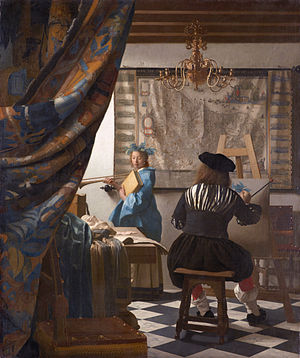
The Art of Painting, also known as The Allegory of Painting, and or Painter in his Studio, is a famous 17th century oil on canvas painting by Dutch painter, Johannes Vermeer. Many art historians believe that it is an allegory of painting, hence the alternative title of the painting. It is the largest and most complex of all of Vermeer's works.
The painting is one of Vermeer's most famous. It offers a realistic presentation of an artist's workplace, and is notable for its depiction of light as it illuminates the interior.
作者簡介:
Johannes Vermeer

Johannes, Jan or Johan Vermeer (Dutch: [jo??ɑn?s jɑn v?r?m??r]; 1632 – December 1675) was a Dutch painter who specialized in domestic interior scenes of middle class life. Vermeer was a moderately successful provincialgenre painter in his lifetime. He seems never to have been particularly wealthy, leaving his wife and children in debt at his death, perhaps because he produced relatively few paintings.
Vermeer worked slowly and with great care, using bright colours and sometimes expensive pigments, with a preference for cornflower blue and yellow. He is particularly renowned for his masterly treatment and use of light in his work.
Vermeer painted mostly domestic interior scenes. "Almost all his paintings are apparently set in two smallish rooms in his house in Delft; they show the same furniture and decorations in various arrangements and they often portray the same people, mostly women".
Recognized during his lifetime in Delft and The Hague, his modest celebrity gave way to obscurity after his death; he was barely mentioned in Arnold Houbraken's major source book on 17th-century Dutch painting (Grand Theatre of Dutch Painters and Women Artists), and was thus omitted from subsequent surveys of Dutch art for nearly two centuries. In the 19th century Vermeer was rediscovered by Gustav Friedrich Waagen andThéophile Thoré-Bürger, who published an essay attributing sixty-six pictures to him, although only thirty-four paintings are universally attributed to him today. Since that time Vermeer's reputation has grown, and he is now acknowledged as one of the greatest painters of the Dutch Golden Age.